
Cooking-Line Surroundings
Accessible backsplashes, walls, equipment sides, control-free exterior panels, and adjacent floors can be degreased without treating electrical or mechanical components as ordinary washable surfaces.
Serving Oxnard, California & surrounding areas
Open 24/7
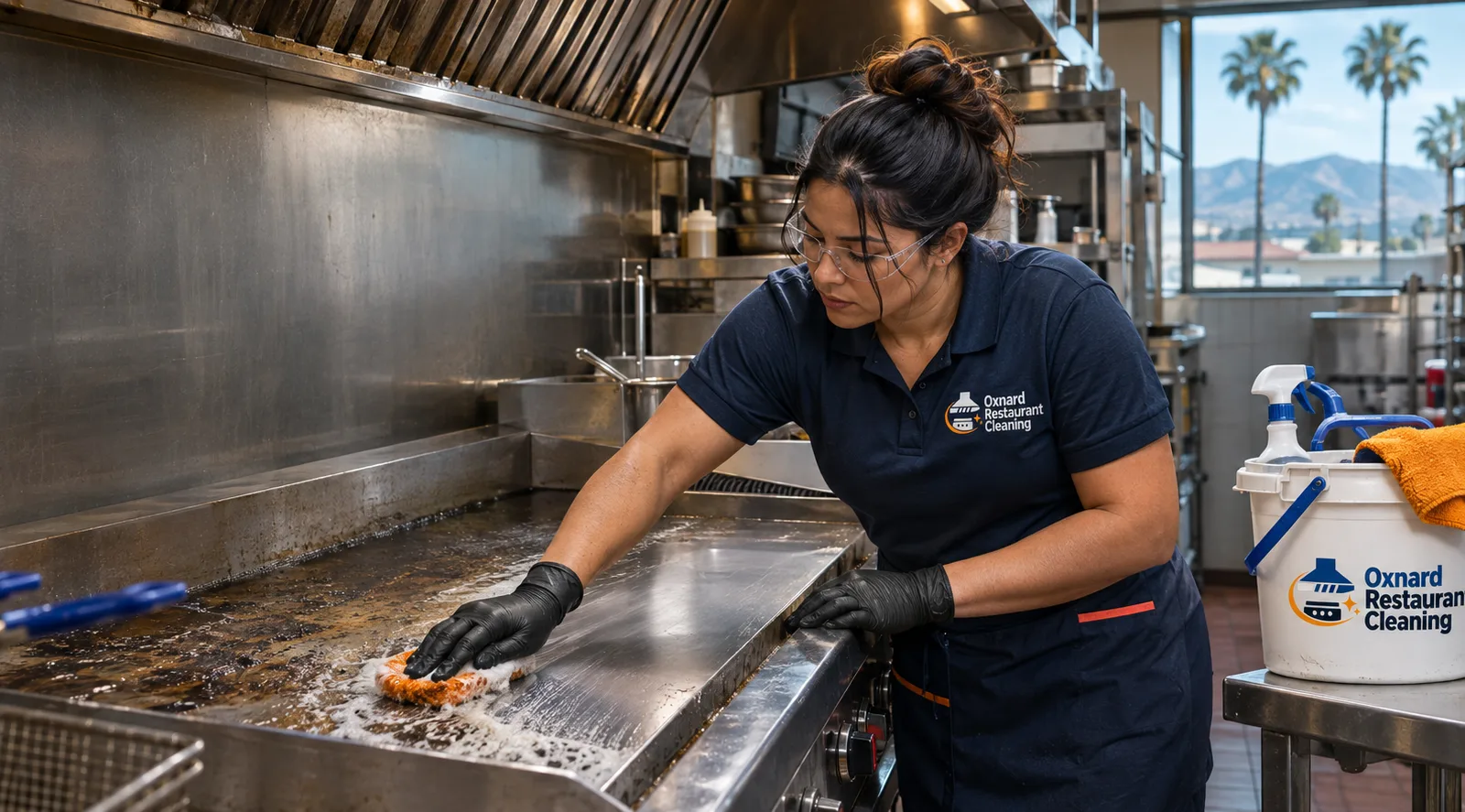
Restaurant kitchen cleaning · Ventura, California
Remove grease and settled debris from cooking areas, equipment exteriors, and hard-to-reach overhead surfaces with a scope built around your kitchen.
Kitchen cleaning scope
Restaurant Kitchen Cleaning Ventura should address the residue that ordinary closing routines leave behind. Aerosolized cooking grease settles on walls, equipment exteriors, pipes, ledges, and overhead structures. Dust then adheres to that film, creating buildup in areas that are difficult for kitchen staff to reach during a normal shift.
Oxnard Restaurant Cleaning develops a written scope based on the room, cooking methods, surface condition, access, and operating schedule. With experience as a professional restaurant company in Oxnard, CA, we perform the agreed work with attention to food-contact boundaries, equipment controls, and the practical demands of an active kitchen. Our location on Commercial Avenue also gives the team a direct base for coordinating work in Ventura.
A proper scope identifies which equipment can be moved, what must remain protected, where degreasing is needed, and whether overhead work requires ladders or extension tools. This planning helps restaurant owners and managers understand what will be cleaned before the crew arrives.
Detailed capabilities
The cleaning plan may include floors, wall surfaces, baseboards, stainless steel equipment exteriors, shelving, prep-area surroundings, and accessible spaces beneath or behind movable equipment. Degreasing products need enough dwell time to loosen residue before agitation and removal. Cleaners may use non-scratch pads, brushes, microfiber cloths, scrapers suited to the surface, wet vacuums, and commercial floor equipment.
Ventura kitchens near the coast may also receive salt-bearing air through open doors or ventilation paths. When that residue combines with airborne grease, stainless steel and painted surfaces need careful product selection and thorough rinsing. Abrasive tools can scratch stainless steel, while overly aggressive chemicals can damage aluminum, labels, seals, or finished surfaces.
This service concerns accessible kitchen surfaces and equipment exteriors. Exhaust-duct cleaning, internal appliance repair, pest treatment, and fire-suppression work are separate specialties. If a hood canopy or nearby surface is included, the written scope should state exactly what will be cleaned and distinguish it from cleaning inside the exhaust system.
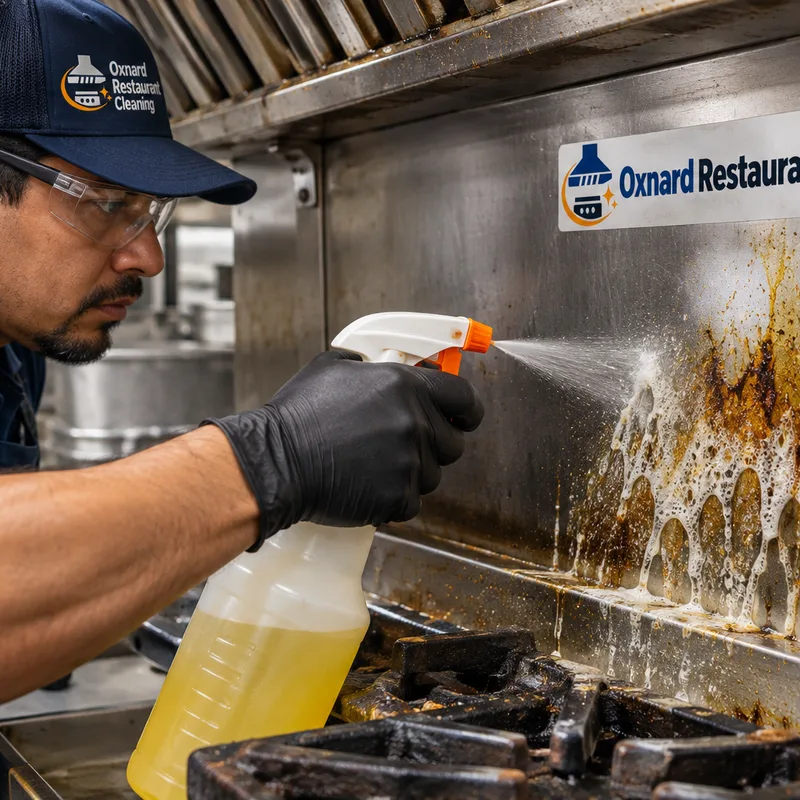
Accessible backsplashes, walls, equipment sides, control-free exterior panels, and adjacent floors can be degreased without treating electrical or mechanical components as ordinary washable surfaces.
Shelving, non-food-contact surfaces, wall junctions, and floor edges can be cleaned after food, utensils, and sensitive supplies are removed or securely protected.
The plan can address grease films, soil at baseboards, corners, grout lines, and accessible areas beneath movable items. The method depends on the floor material and drainage.
Pipes, conduit, vents, beams, ledges, and fixture exteriors can collect greasy dust. Access height and the stability of the surface determine the safest cleaning method.
Reachable exterior surfaces may be hand-cleaned with attention to labels, switches, seals, wiring, pilot areas, and manufacturer restrictions.
The crew removes cleaning residue, checks the agreed work areas, and leaves surfaces ready for the restaurant's own reopening and food-preparation procedures.
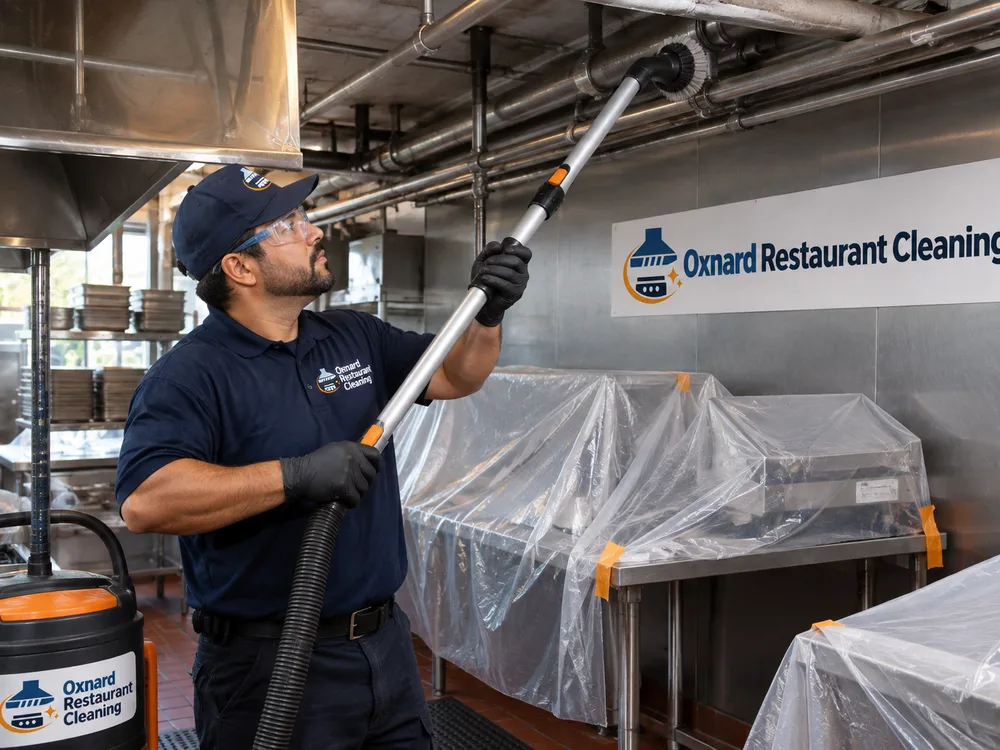
Overhead cleaning
Restaurant High Dusting Ventura targets settled debris on surfaces that are beyond routine reach. Common locations include exposed pipes, ceiling vents, beams, conduit, light-fixture exteriors, refrigeration tops, wall ledges, and the upper faces of signs or cabinets. In kitchens with exposed ceilings, these surfaces can hold a mix of lint, dust, and aerosolized grease.
High dusting begins with an access and hazard review. The crew checks ceiling height, stable ladder placement, overhead obstructions, nearby heat sources, and whether equipment or preparation surfaces need to be covered. Dry dusting alone is often ineffective on greasy deposits because it can smear residue or send particles into the room. HEPA-filtered vacuuming, controlled wiping, and surface-compatible degreasing may be used according to the soil and material.
Overhead cleaning should be scheduled when food is absent and active preparation has stopped. Sensitive equipment, utensils, and exposed food-contact surfaces require protection. After high work is complete, lower surfaces and floors are cleaned so dislodged material is removed rather than left for the opening crew.
Service process
We review the cooking line, prep areas, storage zones, floors, overhead structures, access limits, and existing heavy buildup. The walkthrough also identifies sensitive surfaces and equipment that cannot be moved.
The work plan lists included areas, exclusions, preparation responsibilities, access needs, and the proposed service window. This is also when one-time deep cleaning and recurring maintenance needs are separated.
Food and loose utensils are removed by the restaurant as agreed. The crew protects nearby equipment and food-contact surfaces, sets up safe access, and selects products suited to each finish.
Overhead debris is addressed first when high dusting is included. Degreasing, detail work, and floor cleaning follow so residue displaced during the work is collected before completion.
The completed work is checked against the scope. Restaurant management can then carry out its required reopening, sanitizing, equipment startup, and food-safety procedures.
Ventura operations
A workable service window depends on more than closing time. Hot equipment must cool, staff may need time to break down stations, and cleaners need enough uninterrupted access to complete wet work before the kitchen resumes operation. The scope should account for drying time, equipment placement, alarm or key procedures, and any limits on water use or floor access.
Downtown Ventura restaurants may have compact kitchens, limited rear access, and little room to stage tools. Restaurants near Ventura Harbor may operate around seafood preparation and visitor-driven meal periods, which can affect shutdown timing and the type of residue present. Commercial locations along major corridors such as Thompson Boulevard may have larger service areas but still need work divided into zones to protect opening schedules. These conditions are reviewed rather than assumed.
One-time cleaning is useful when buildup has accumulated, a kitchen is preparing for a management change, or an overhead area has gone beyond routine reach. Recurring service can keep defined zones on a planned cycle. Frequency depends on cooking volume, menu, ventilation performance, ceiling configuration, staffing routines, and how quickly grease returns.
Pricing factors
Restaurant kitchen cleaning in Ventura typically ranges from $500 to $2,500 for a scheduled deep cleaning, while large kitchens, severe grease buildup, or extensive high dusting may cost more. A smaller kitchen with clear access generally falls near the lower end; a full cooking line and overhead structure require more labor.
Final pricing depends on square footage, soil level, ceiling height, equipment movement, surface materials, service timing, and included areas. A walkthrough confirms the exact cost and written scope before cleaning is scheduled.
Arrange a kitchen walkthrough to identify heavy buildup, overhead access needs, and a service window that fits your operating schedule.
Call for a Free QuoteCommon questions
A focused cleaning may take several hours, while a large kitchen with heavy grease and overhead work may require a full shift or work across planned service windows. Cooking-line length, soil level, ceiling height, equipment access, and cooling time all affect duration. A walkthrough provides a schedule based on the actual kitchen rather than a generic estimate.
Yes, after-hours cleaning can be planned when building access, equipment cooling, staff breakdown, and reopening time allow enough room for the work. Ventura restaurants with compact service alleys or shared commercial access may need a specific arrival and staging plan. The agreed window should also leave time for surfaces to dry and for management to complete reopening checks.
High dusting can include reachable exposed pipes, conduit, beams, vents, ledges, and fixture exteriors when they are listed in the scope. Ceiling material, height, heat sources, electrical hazards, and ladder placement determine what can be cleaned safely. Porous, damaged, or unstable materials may need specialist review rather than routine cleaning.
Yes, exposed food and loose utensils should be removed or secured according to the preparation plan before cleaning begins. Food-contact surfaces and sensitive equipment also need protection, especially when overhead dusting or degreasing is scheduled. Responsibilities are assigned during the walkthrough so the restaurant and crew know what must happen before arrival.
No, general restaurant kitchen cleaning is different from cleaning the interior of a commercial exhaust system. This service may cover agreed accessible surfaces around a hood canopy, but internal ducts, fans, fire-suppression components, and required system documentation belong to qualified specialty providers. The written scope identifies this boundary clearly.
The right schedule depends on cooking volume, grease production, menu, ventilation, ceiling design, and the effectiveness of daily closing routines. A high-output fryer line usually needs attention sooner than a low-grease preparation area. After an initial service, the rate at which residue returns can guide a practical recurring schedule.
Yes, many exterior and accessible surrounding surfaces can be cleaned while fixed equipment remains in place. The crew should not force, disconnect, or move gas, electrical, refrigeration, or plumbed equipment unless that work has been properly arranged. Movable items and access limits are identified during the walkthrough.
Tell Oxnard Restaurant Cleaning about your cooking line, overhead buildup, access limits, and preferred service window. We will define the included areas and provide a clear plan before work begins.
Request Service
Tell Oxnard Restaurant Cleaning about your kitchen, dining areas, restrooms, floors, preferred schedule, and current concerns. The next step is a practical review of the work your property needs.