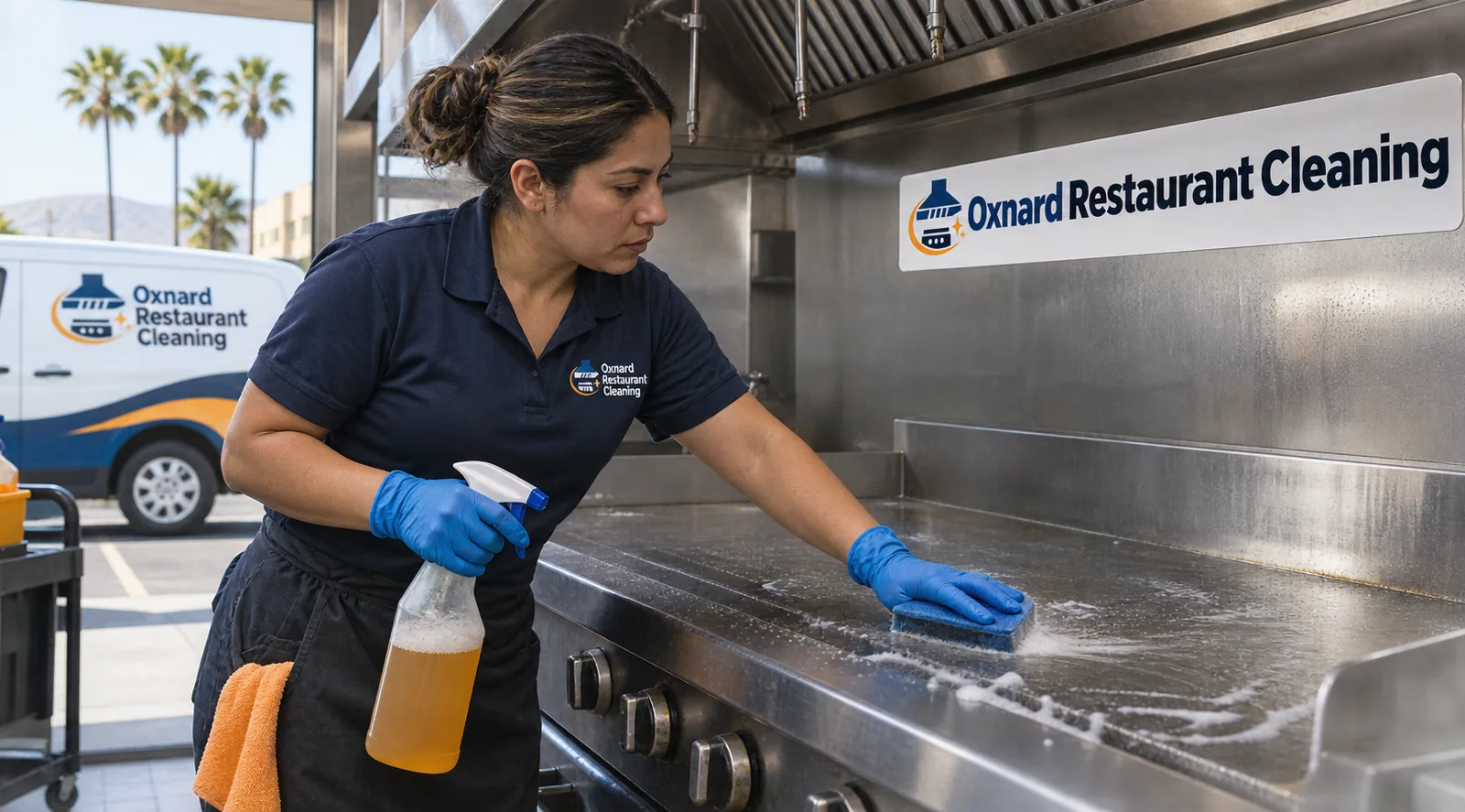
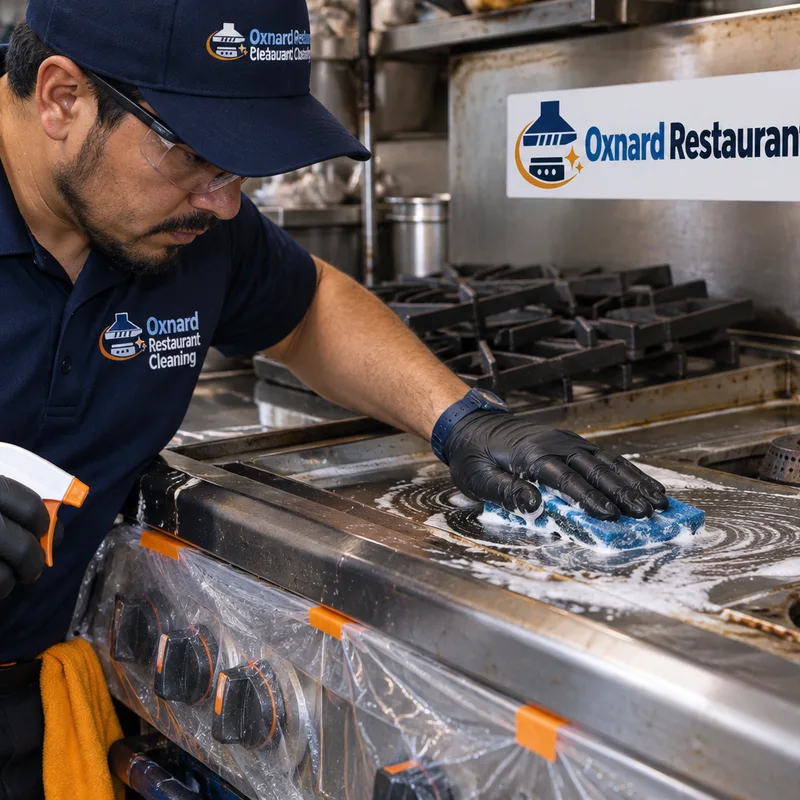
A smaller kitchen may be completed in one work period, while a large facility or kitchen with heavy buildup may require a longer shift or phased work. Equipment count, access, carbon deposits, and the amount of preparation all affect duration. Oxnard kitchens with narrow service corridors or limited staging space may need a more controlled sequence.
Yes, restaurant kitchen cleaning can often be scheduled outside food-preparation and service hours. The work window must allow equipment to cool before cleaning and leave adequate time for drying, inspection, and safe startup. The agreed schedule should also account for alarms, keys, loading access, and any building restrictions.
Accessible equipment interiors can be included when the unit is safely shut down, cooled, and suitable for cleaning under the manufacturer's instructions. The scope should identify removable parts and user-accessible compartments. Repairs, gas disconnection, electrical work, and technical disassembly require properly qualified service personnel.
General surface cleaning around hood canopies may be included, but certified exhaust-system cleaning should be treated as a distinct scope. Grease-removal work inside hood plenums, fans, and ductwork has specific access and fire-safety requirements. Managers should confirm exactly which hood surfaces and components are covered before scheduling.
Staff should remove or protect food, utensils, paper goods, and portable appliances from the work area. Cooking equipment should be shut down and cooled according to its operating instructions. The manager should also identify sensitive equipment, access restrictions, floor-drain locations, and any unit that cannot be moved.
The right frequency depends on cooking volume, menu, grease production, equipment layout, and the facility's cleaning plan. High-output frying or charbroiling operations generally need focused attention more often than light-preparation kitchens. A first service can establish the condition of the space and help set a practical recurring schedule.
No cleaning company should guarantee an inspection outcome because compliance also depends on food handling, temperatures, storage, pest control, employee practices, and facility maintenance. Professional cleaning can address the agreed grease and soil buildup. The operator remains responsible for meeting Ventura County and California food-safety requirements.